
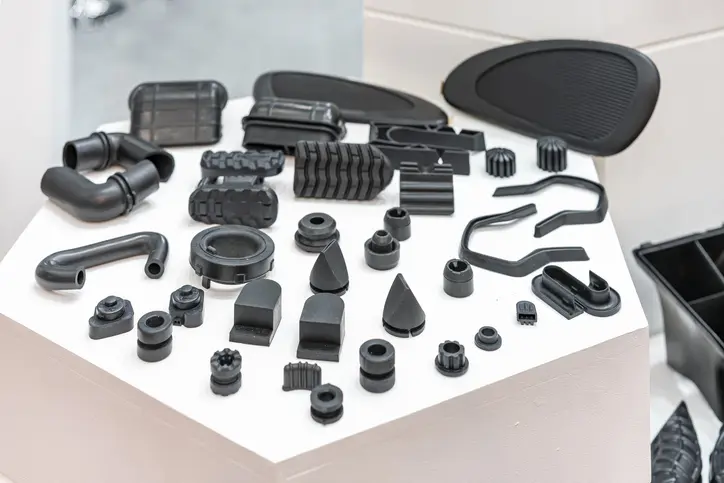
How Liquid Silicone Rubber Part Manufacturers Master Tight-Tolerance Tooling
The demand for liquid silicone rubber products only continues to grow. Parts are starting to become more complex, and performance requirements are becoming more exacting. That means that manufacturers are under increasing pressure to deliver parts that meet tight specifications. Even a small deviation can mean a product failing in a critical moment. So, how do liquid silicone rubber part manufacturers create components you can rely on? The answer is tight-tolerance tooling.
Material Selection for High-Precision Mold Construction
Creating a precision liquid silicone rubber injection mold starts with choosing the right material. Hardened steels are usually chosen for their dimensional stability, wear resistance, and surface finish capability.
Design Engineering: Where Tight Tolerances Begin
Getting tight-tolerance components is dependent on the right tooling design. Engineers used advanced tools to anticipate how LSR will behave as it flows, cures, and cools inside the mold. Your engineering team will optimize draft angles, gate locations, and more to ensure a high-quality end result.
Quality Validation
Once tooling is complete, the production process can begin. That’s where quality validation comes into play. Every step of the production line should be validated through rigorous quality control practices. This might include using coordinate measuring machines (CMMs) to verify that parts meet your specifications. Manufacturers may also perform mold trials to monitor shrinkage, cure time, and part release. These tests are crucial to ensure that every part of each run meets demanding specifications.
Industries That Demand This Level of Precision
High-precision LSR tooling is extremely important across a range of industries. This includes:
- Aerospace: Parts must comply with AS9100 standards. It incorporates all ISO 9001:2015 requirements while adding over 100 industry-specific requirements. A main focus area of this project is to emphasize defect prevention, which can be mitigated with the right tooling.
- Military: Many parts within the military sector must also comply with AS9100 standards. Like the aerospace industry, militaries rely on tight-tolerance tooling to comply with these standards.
- Medical/Pharma: Components in this industry must be compliant with ISO 13485 requirements. These rules ensure medical devices meet both customer and regulatory demands for safety and efficacy. As with the other industries mentioned above, tight-tolerance tooling is the foundation for compliant components.
Other sectors also rely on accurate tooling to get quality components. At Moldtech, we service a range of industries to help them with their needs. Learn more here.
Trust Moldtech for High-Quality Liquid Silicone Rubber Manufacturing
If you’re looking for reliable liquid silicone rubber manufacturers, turn to Moldtech. For decades, we’ve been offering high-quality rubber injection molding for a range of industries. We can create durable components that meet your exact needs.
Our Lancaster, NY, facility is vertically integrated with close to 50,000 square feet of production space. That includes clean room and climate-controlled workspaces. With extensive experience, we design, manufacture, and assemble your parts in-house, which gives you maximum control over the process.
Some of the biggest organizations in the world trust us to create tight-tolerance components. Boeing, Bosch, Johnson & Johnson, and the U.S. military all rely on us for their needs. Contact us to learn more about how we can help you meet your goals.