A chemical resistance chart can only tell you so much. Here's how custom rubber compounding tunes the recipe to your exact media, and when it's worth the investment.
How long does the rubber injection molding process take? We break down each stage from quote to production, including DFM review, tooling, prototyping, and qualification, plus the most common delays and how to avoid them.
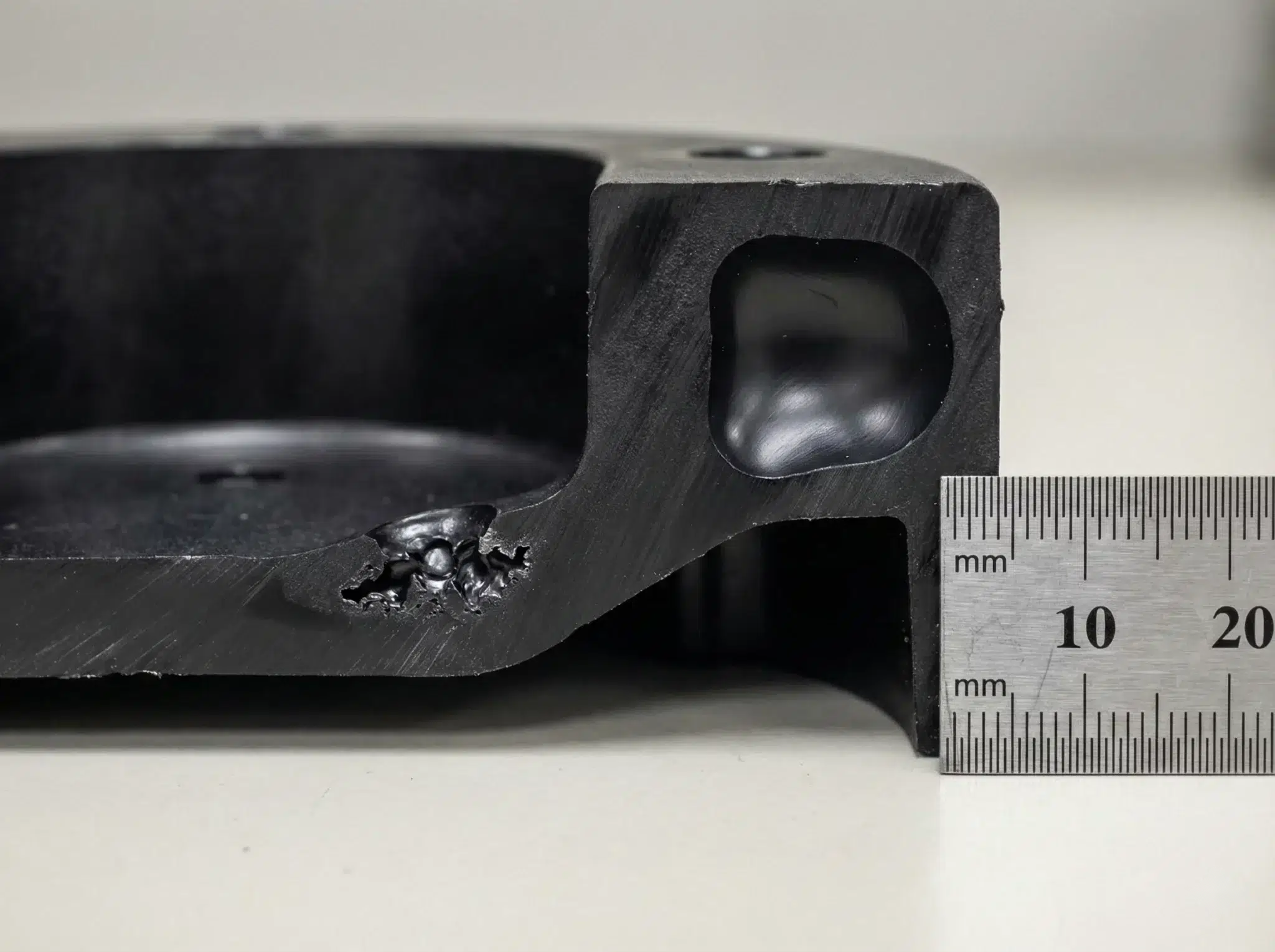
Flash, bubbles, and flow lines aren't just scrap. In rubber molding, every defect is a clue about what happened inside the mold. Learn what the most common defects reveal about your tooling, material, and process, and how to trace each one back to its root cause.
As electronics get smaller, sealing them gets harder. Learn why silicone gaskets are the go-to choice for protecting compact devices from moisture, dust, and heat, and how micro molding and overmolding help seal even the tightest designs.
Choosing between low-volume production and high volume manufacturing affects your tooling costs, lead times, and how well your process scales. Here's how to pick the right rubber molding strategy for your next project.
A durometer reading is only as good as the way it's tested. Here's how Shore A and Shore D hardness are measured, what can throw off a reading, and how we verify durometer through every production run.
LSR and HCR are both silicone, but they mold very differently. Here's how to weigh viscosity, tolerances, cost, and volume to pick the right process for your part.
Not all injection molding materials perform the same. Here's how EPDM, Nitrile, Neoprene, and Viton/FKM compare, and how to choose the right one for your application.